
Why Do Planes Dump Fuel? It's All About Landing Weight
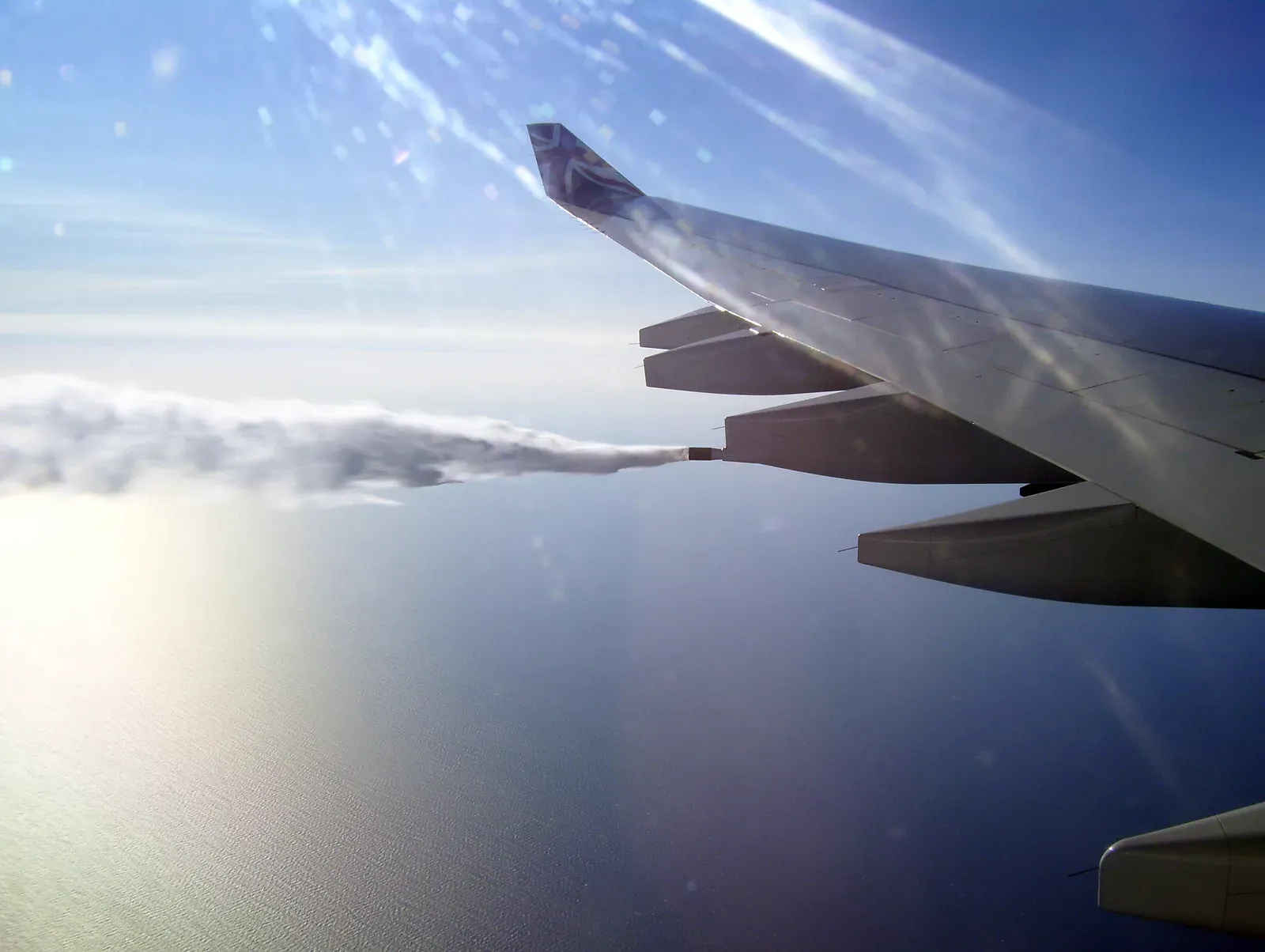
Planes dump fuel to get light enough to land. A jet that has to come back soon after takeoff can be heavier than its maximum landing weight, and dumping fuel sheds that extra weight in minutes instead of hours.
From the ground it looks alarming. A widebody climbs out of the airport, banks around, and heads back the way it came. Then something starts streaming from the wings, two long pale trails, and every phone in a five mile radius comes up filming. It looks like the plane is falling apart in slow motion.
What you’re seeing is fuel dumping, one of the more misunderstood sights in aviation. Engineers built the plane to do it, on purpose, for one specific reason: getting rid of weight it can no longer safely carry to the ground.
Why a plane can be too heavy to land
Every airliner has two different weight limits. There’s a maximum takeoff weight, the heaviest the plane can be when it leaves the runway, and a lower maximum landing weight. Wings and landing gear are built to absorb the shock of touchdown, and that shock scales with weight, so a jet fine for hurtling down a runway can be too heavy to slam back onto one safely minutes later.
Normally that gap never matters. A long-haul flight burns fuel for ten or twelve hours, so by landing it’s already well under its limit. The problem shows up when a flight has to come down almost immediately after departure: a sick passenger, a mechanical warning, a diversion called minutes after wheels-up. The plane is still near its heavy takeoff weight, stuffed with fuel meant for an ocean crossing, and now it needs to land in the next half hour instead of the next half day.
What dumping actually does
This is where fuel jettison earns its keep. Certain aircraft have a dedicated system: pumps that push fuel from the tanks out through nozzles near the wingtips. Air traffic control times and routes the dump over open water or sparsely populated areas whenever it can, following FAA guidance, which is why you’ll see it staged over a bay or farmland rather than a downtown core. Crews dump high when they can, which gives the fuel time to evaporate, and that’s most of the story of where the dumped fuel actually goes.
Within minutes, an aircraft can shed tens of thousands of pounds and drop back under its maximum landing weight. That’s the whole point: speed. In a real emergency, minutes matter more than fuel does.
Not every plane can do it
Here’s the part that surprises people. Fuel dumping isn’t universal. Big long-haul widebodies built to carry huge fuel loads over oceans, the 747, 777, A330, A340, A350, and A380, generally have jettison systems, because the gap between their takeoff and landing weights is large enough to be worth engineering around.
Most narrowbodies don’t. The A320 family and the 737 typically have no fuel dump system at all: they don’t carry enough excess fuel to justify the extra plumbing and weight. If one of these needs to land heavy, the crew has two other options. Hold in a circling pattern and burn fuel down through the engines, which works but costs time. Or, if the emergency is serious enough, perform an overweight landing. It’s a permitted, trained-for procedure, though the aircraft usually gets an inspection afterward to confirm the gear and structure took the extra load in stride.
Which option a crew picks comes down to one tradeoff: how much time is there, and how much weight needs to go. Fuel dumping exists for the moments when the honest answer is not much of either.
So the next time you see fuel streaming from a plane’s wings, you’re watching a crew use a system that was built into the aircraft precisely for this moment, trading fuel for time so the plane can come down at a weight its structure was designed to handle. That’s a plane doing exactly what it’s supposed to.
Curious how much fuel a flight like that is carrying in the first place? Our fuel & CO2 estimator turns a route and aircraft class into a fuel range for the trip.
FAQ
Is fuel dumping dangerous, and does the fuel reach the ground? The procedure itself is routine and well practiced. It’s done at altitude specifically so the fuel atomizes and mostly evaporates in the air (here’s where dumped fuel goes on the way down), and controllers route it away from populated areas when they can. Trace residue reaching the ground is a far smaller concern than the alternative of an aircraft landing far heavier than its structure was designed for.
Why don’t all planes do it? Fuel dump systems add weight, complexity, and cost, so manufacturers only build them into aircraft that regularly carry huge fuel loads, mainly long-haul widebodies. Shorter-haul jets like the A320 or 737 don’t carry enough excess fuel to justify one, so they circle to burn fuel off or land overweight instead.
Is a fuel dump the same as a contrail? No, though from the ground they can look similar. A contrail is water vapor from engine exhaust condensing in cold air, while a fuel dump is liquid fuel released from the wings. It’s a common mix-up, especially at a distance.
Does dumping fuel mean something is seriously wrong? It means the crew needs to land sooner than the fuel load allows, which can range from a minor precaution to a genuine emergency. Either way, the dump itself is the safe, deliberate part of the response.
Read next
Why Is British Airways Called Speedbird? Callsigns Explained
British Airways is called Speedbird after a 1932 Imperial Airways logo. Here's how that bird became BA's radio callsign, and how callsigns work.
How Flying WorksHow High Do Planes Fly? Cruising Altitude, Explained
Most airliners cruise between 31,000 and 42,000 feet, often near 35,000 feet, about 10.7 km up. Here's why that band exists and what caps it.
How Flying WorksWhat Does Mayday Mean? Origin, Pan-Pan and Squawk 7700
Mayday is the radio call for grave and imminent danger, said three times. Where the word comes from, plus what pan-pan, heavy, and squawk really mean.
Liked this?
Get the next one in your inbox. Aviation explained for the people who never lost the wonder. One email, no noise.