
How Much Fuel Does a Plane Use? (The Numbers Are Wild)
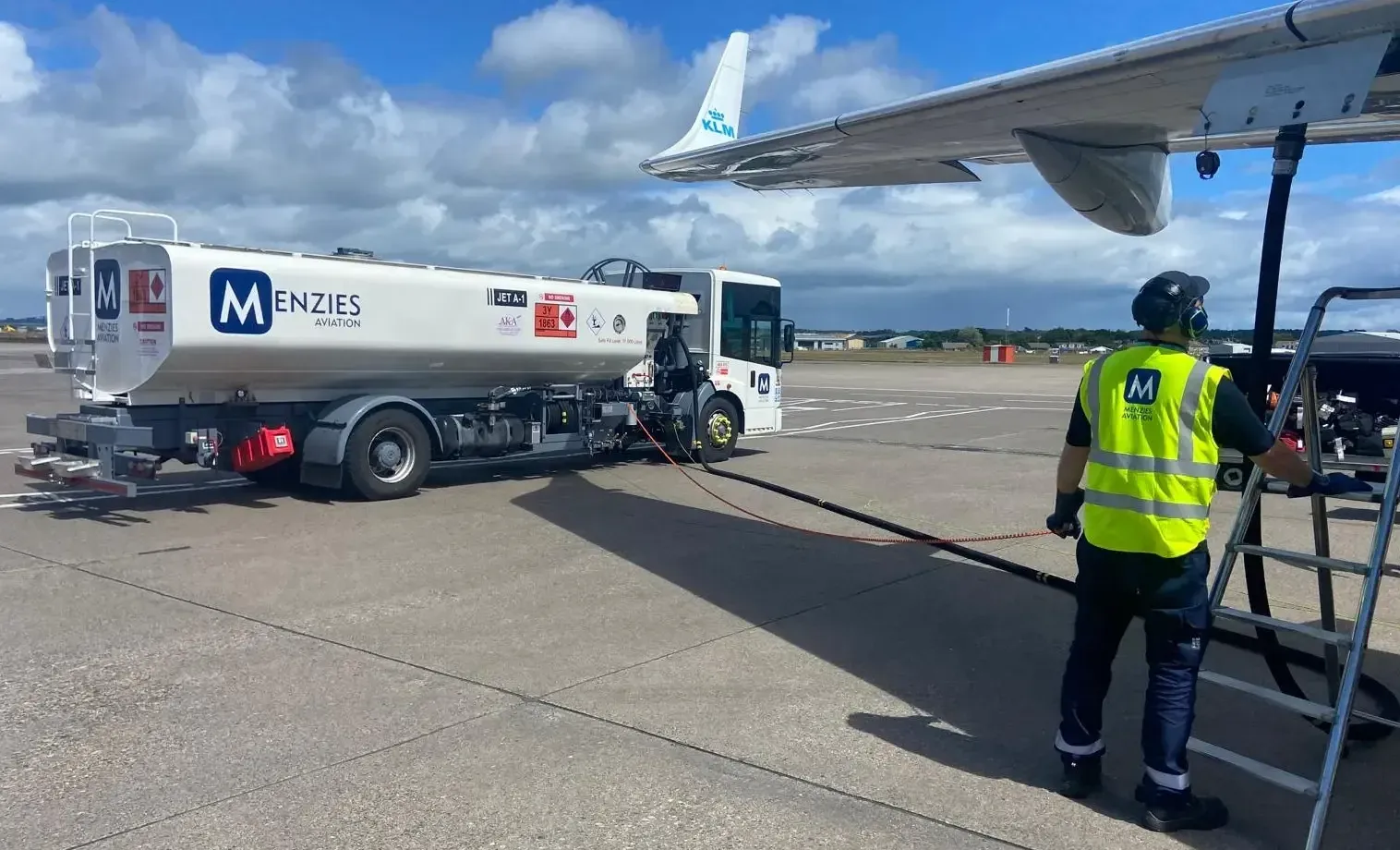
How much fuel does a plane use? Start with this: a Boeing 747 in cruise burns close to a gallon of fuel every second. Every single second, hour after hour, all the way across an ocean. By the time you’ve read this sentence out loud, a 747 somewhere has gone through a couple more gallons.
Scale that across a whole flight and the numbers stop sounding real. A Boeing 787-9 flying London to Austin burned about 49 tonnes of fuel in roughly 10 hours. An Airbus A350-900 on the nearly 15-hour run from London to Santiago burned about 86. And yet, spread that same fuel across everyone onboard, and flying turns out to be one of the more efficient ways humans move around the planet. Here’s how both of those things are true at once.
The raw numbers: per second, per hour, per flight
A 747-400 in cruise burns about 3,400 gallons of fuel an hour, roughly 10 tonnes, which works out to close to a gallon a second. That’s the cruise figure in Aircraft Commerce’s fuel-burn analysis of the jumbo, and it holds steady for as long as the aircraft stays up there.
Stretch that over a long-haul flight and the total climbs into genuinely large territory. On Hong Kong to Vancouver, the same analysis puts a 747-400’s trip fuel at 38,000 to 40,000 gallons, about 114 to 118 tonnes. The rate also moves around during the flight. Takeoff and the climb out are the thirstiest phase: the engines are running near maximum thrust to haul a fully loaded jet up to cruising altitude, burning fuel faster per minute than at any other point. Once the plane levels off, fuel flow drops off noticeably, which is a big part of why airlines fight so hard to cruise as high as the aircraft allows: thinner air up there means less drag, and less drag means the engines can throttle back and still hold speed.
Not every jet drinks the same
Here’s where the numbers swing hard, because “a plane” covers everything from a jumbo to a puddle-jumper, and fuel burn tracks size closely.
| Aircraft | Fuel per hour | Example trip | Type |
|---|---|---|---|
| Boeing 747-400 | About 10 tonnes (cruise) | Hong Kong to Vancouver: 38,000 to 40,000 gallons | Widebody, four engines |
| Boeing 777-200ER | About 6.3 to 6.8 tonnes (block) | London to Santiago: about 101 tonnes | Widebody, two engines |
| Airbus A350-900 / Boeing 787-9 | About 5 to 6 tonnes (block) | London to Austin: about 49 tonnes (787-9) | Widebody, two engines |
| Airbus A320neo / Boeing 737-800 | Trip figure only | Amsterdam to Tenerife: about 3,300 gallons (A320neo), 3,900 (737-800) | Narrowbody |
A block hour runs from pushback to arrival at the gate, so it folds taxi, climb and descent into the average. The 747 figure is cruise only.
The size difference shows up right in the trip numbers. On Amsterdam to Tenerife, an 1,800-nautical-mile run, an A320neo needs about 3,300 gallons and a 737-800 about 3,900. A newer generation of twin-engine widebodies now flies the long-haul missions the 747 used to own, on roughly half the jumbo’s fuel an hour. Spread across a whole Hong Kong to Vancouver trip, a 747-400 averages about 10 tonnes an hour, while Aircraft Commerce’s fuel burn analysis puts a 787-9 under 5 tonnes per block hour from London to Austin, and an A350-900 under 6. It’s a big reason ultra-long-haul routes became viable: the fuel math finally closed.
One more detail worth knowing: none of this gets measured in gallons on the operational side. Airlines fuel and track everything by weight, kilograms or tonnes, because jet fuel expands and contracts with temperature and a gallon of cold fuel weighs more than a gallon of warm fuel. Weight is what actually matters for takeoff performance and landing limits, so weight is what gets written on the paperwork.
The twist: it’s actually efficient per person
Here’s the part that flips the whole story. Take that same 747 burning close to a gallon a second, divide it by everyone sitting in the cabin, and the picture changes completely.
On transatlantic flights, airlines averaged about 75 passenger-miles per gallon by the ICCT’s count (32 passenger-kilometres per litre, from 2014 data), and the most efficient airline managed about 94. Put a car next to that: a car doing 40 mpg with only the driver aboard is doing 40 passenger-miles per gallon, so per person it burns close to twice the fuel of the average transatlantic seat. Put four people in that same car and it’s doing 160, comfortably ahead. With just the driver, the plane wins. The thirstiest machine most of us will ever step onto turns out to be one of the more fuel-efficient ways to move a human being a long distance, as long as the seats are full.
That “as long as the seats are full” part is doing real work. A half-empty plane loses the advantage fast, since the fuel burn barely changes whether the cabin is packed or half empty: most of the fuel goes to moving the aircraft itself. That’s the whole logic behind why airlines chase full flights so aggressively. An empty seat hurts the efficiency math as much as the revenue math.
The strange truth about that fuel bill
So there it is: a machine that burns close to a gallon of fuel a second, and still beats a solo driver on a per-person basis. Both numbers are true, they’re just answering different questions. One is about the size of the tank. The other is about what happens when you divide that tank by everyone sitting around you. Next time you’re strapped in and the engines spool up for takeoff, that rising whine is the thirstiest stretch of the whole flight, working out, oddly, to one of the more efficient trips per person you’re likely to take all year.
Curious what that means in CO2 for a specific trip? Our fuel & CO2 estimator turns a route and aircraft class into a fuel range and a per-passenger CO2 number.
FAQ
How much fuel does a 747 use? About 3,400 gallons an hour in cruise, roughly 10 tonnes, which works out to close to a gallon of fuel every second. On Hong Kong to Vancouver, a 747-400’s trip fuel comes to 38,000 to 40,000 gallons.
Is flying less efficient than driving? Per passenger, it can come out ahead. The ICCT found transatlantic flights averaged about 75 passenger-miles per gallon, and the most efficient airline about 94. A car doing 40 mpg with only the driver aboard is doing 40 passenger-miles per gallon, so the average flight beats it. Fill that car with four people and the car wins.
How much fuel does a jet burn on a long-haul flight? It varies a lot by aircraft and route. A Boeing 787-9 burned about 49 tonnes flying London to Austin in roughly 10 hours, and an Airbus A350-900 burned about 86 tonnes on the nearly 15-hour run from London to Santiago. Takeoff and climb burn fuel fastest, then the rate drops once the aircraft reaches cruising altitude.
Why do airlines measure fuel in kilograms instead of gallons? Because weight is what matters for takeoff and landing performance, and jet fuel’s volume shifts with temperature while its weight stays the same. A gallon of fuel on a cold morning weighs more than the same gallon on a hot afternoon, so airlines fuel by weight to keep the numbers consistent.
Read next
Why Is British Airways Called Speedbird? Callsigns Explained
British Airways is called Speedbird after a 1932 Imperial Airways logo. Here's how that bird became BA's radio callsign, and how callsigns work.
How Flying WorksHow High Do Planes Fly? Cruising Altitude, Explained
Most airliners cruise between 31,000 and 42,000 feet, often near 35,000 feet, about 10.7 km up. Here's why that band exists and what caps it.
How Flying WorksWhat Does Mayday Mean? Origin, Pan-Pan and Squawk 7700
Mayday is the radio call for grave and imminent danger, said three times. Where the word comes from, plus what pan-pan, heavy, and squawk really mean.
Liked this?
Get the next one in your inbox. Aviation explained for the people who never lost the wonder. One email, no noise.