
Where Does Dumped Jet Fuel Go? Almost None Reaches You
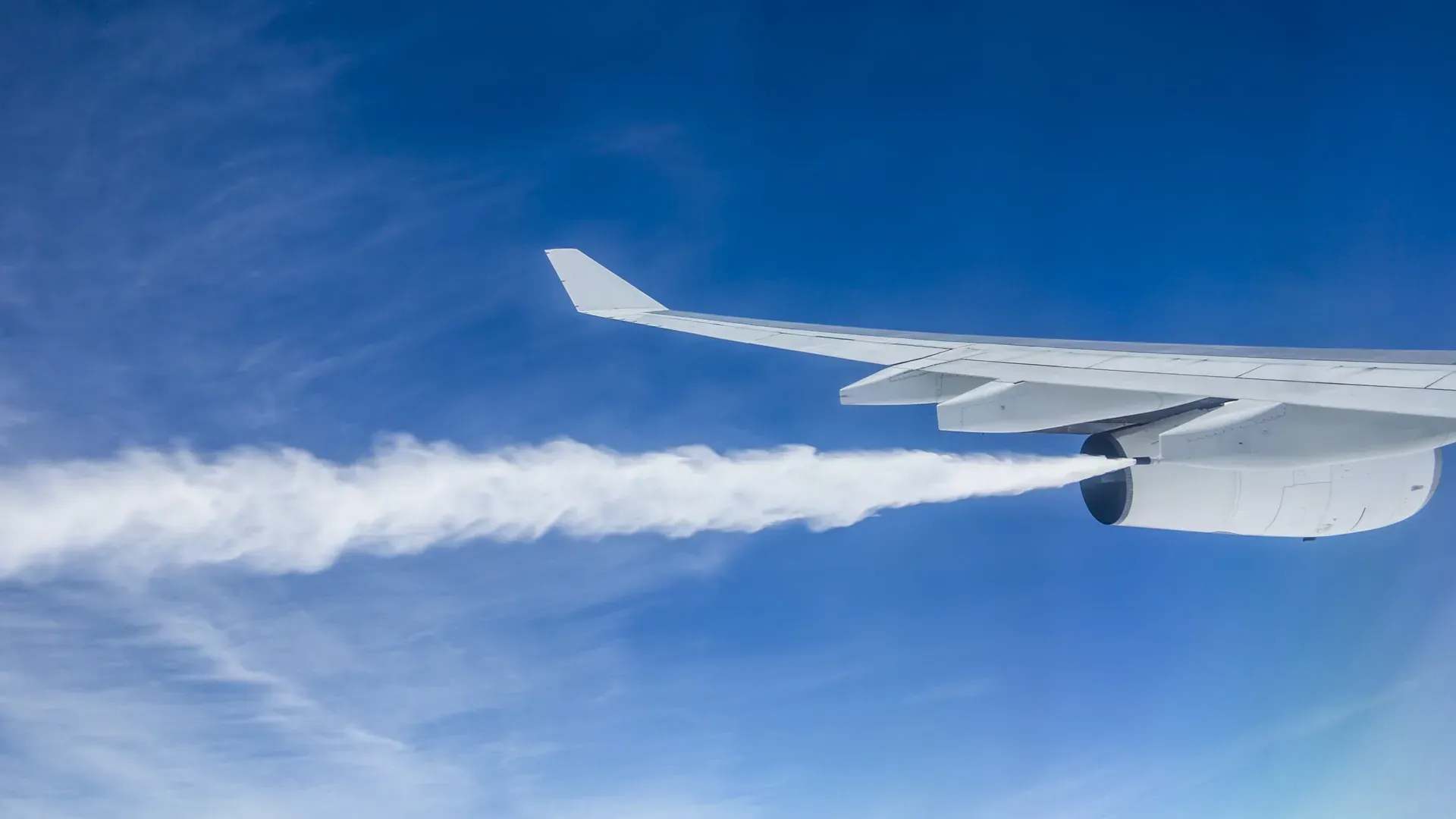
Almost none of it reaches the ground. A jet dumps fuel through nozzles on its outer wings, the spray breaks into a fine mist, and most of that mist evaporates on the way down.
That’s worth knowing the next time a plane circles over your town for hours. On August 15, 2026, a Vietnam Airlines 787 took off from Munich, hit a problem in the first minutes of flight, and couldn’t just turn around and land. Instead, flight VN34 spent nearly two and a half hours circling high over the Munich area, slowly getting rid of fuel, before setting down for an emergency landing. Everyone on board, 271 passengers and 16 crew, walked away fine.
If you were on the ground watching that track loop over the city again and again, one question comes up fast. All that fuel has to go somewhere. Here’s where.
Almost none of it reaches you
Pumps push the fuel through those nozzles near the wingtips at high pressure, and the sheer force shatters the stream into a spray of tiny droplets scattered across the sky.
Those droplets are the whole trick. Fuel goes out high up, at the altitudes controllers assign for exactly this, and the mist drifts and thins over a wide area as it falls. Small droplets carry a lot of surface area for their size, so they evaporate fast. Warmer air and higher altitude speed that up even more. By the time the fuel has fallen a few thousand feet, most of it has already turned to vapor and mixed into the atmosphere. Very little makes it to the surface as liquid.
Air traffic control sets the whole thing up. Controllers hand the crew a block of airspace to work in and, whenever they can, steer the plane out over water or empty land while it dumps, in line with FAA guidance. Boeing advises airlines to dump fuel above 5,000 to 6,000 feet whenever they can, so the spray has room to evaporate, and in the US controllers keep a dumping jet at least 2,000 feet above the highest obstacle nearby. Do it that way and the fuel disperses and fades into the sky long before it could fall as kerosene rain.
Why get rid of good fuel at all
Weight. Every airliner has two limits: the most it can weigh at takeoff, and a lower maximum for landing. A jet loaded with fuel for a long flight is often too heavy to touch down safely in its first hour, before it’s burned much off. So if something goes wrong early and it needs to come down now, dumping sheds thousands of pounds in minutes and gets it back under the landing limit.
The one time it does reach the ground
The mist-and-evaporation picture holds as long as the fuel goes out high. Get the altitude wrong and the reassuring part falls apart.
On January 14, 2020, a Delta 777 returning to Los Angeles after an engine problem dumped fuel at around 2,000 feet, far lower than the procedure calls for, and without properly telling air traffic control. That low, there’s no room for the mist to spread and evaporate. The fuel came down as liquid across several school playgrounds under the flight path. Around 50 to 60 people, including about 20 children, were treated for minor skin, eye, and lung irritation. Nobody was hospitalized. The FAA later said the crew hadn’t dumped at a safe altitude.
It’s the exception that proves the rule. That altitude requirement is the whole reason dumped fuel normally disappears long before it reaches anyone.
The part most people don’t expect
Only some jets can dump fuel at all, and why planes dump fuel in the first place comes down to landing weight.
So the next time you see a plane trailing pale streamers over a city, remember what it means. Nobody dumps fuel for fun. By the time those nozzles open, something has already gone wrong up there, and the crew has decided the fastest safe way home is to give up the fuel they’d normally need. The whole system is built so that decision doesn’t land on the people below. Done right, the mess just fades into the sky before it ever touches the ground.
FAQ
How High Do Planes Dump Fuel? Boeing advises airlines to dump above 5,000 to 6,000 feet whenever they can, which gives the spray room to evaporate, with no restriction on going lower if the crew needs to. In the US, air traffic controllers keep a dumping jet at least 2,000 feet above the highest obstacle within 5 miles.
Can Dumped Fuel Reach the Ground? Rarely. Released high up as a fine mist, most of it evaporates long before it gets near the surface. The exception is a dump done far too low: in January 2020, a Delta 777 returning to Los Angeles dumped fuel at around 2,000 feet, and it came down as liquid across several school playgrounds. Around 50 to 60 people, including about 20 children, were treated for minor irritation, and nobody was hospitalized.
Read next
Why Is British Airways Called Speedbird? Callsigns Explained
British Airways is called Speedbird after a 1932 Imperial Airways logo. Here's how that bird became BA's radio callsign, and how callsigns work.
How Flying WorksHow High Do Planes Fly? Cruising Altitude, Explained
Most airliners cruise between 31,000 and 42,000 feet, often near 35,000 feet, about 10.7 km up. Here's why that band exists and what caps it.
How Flying WorksWhat Does Mayday Mean? Origin, Pan-Pan and Squawk 7700
Mayday is the radio call for grave and imminent danger, said three times. Where the word comes from, plus what pan-pan, heavy, and squawk really mean.
Liked this?
Get the next one in your inbox. Aviation explained for the people who never lost the wonder. One email, no noise.