
Why Are Airplane Windows Round? The Comet Story
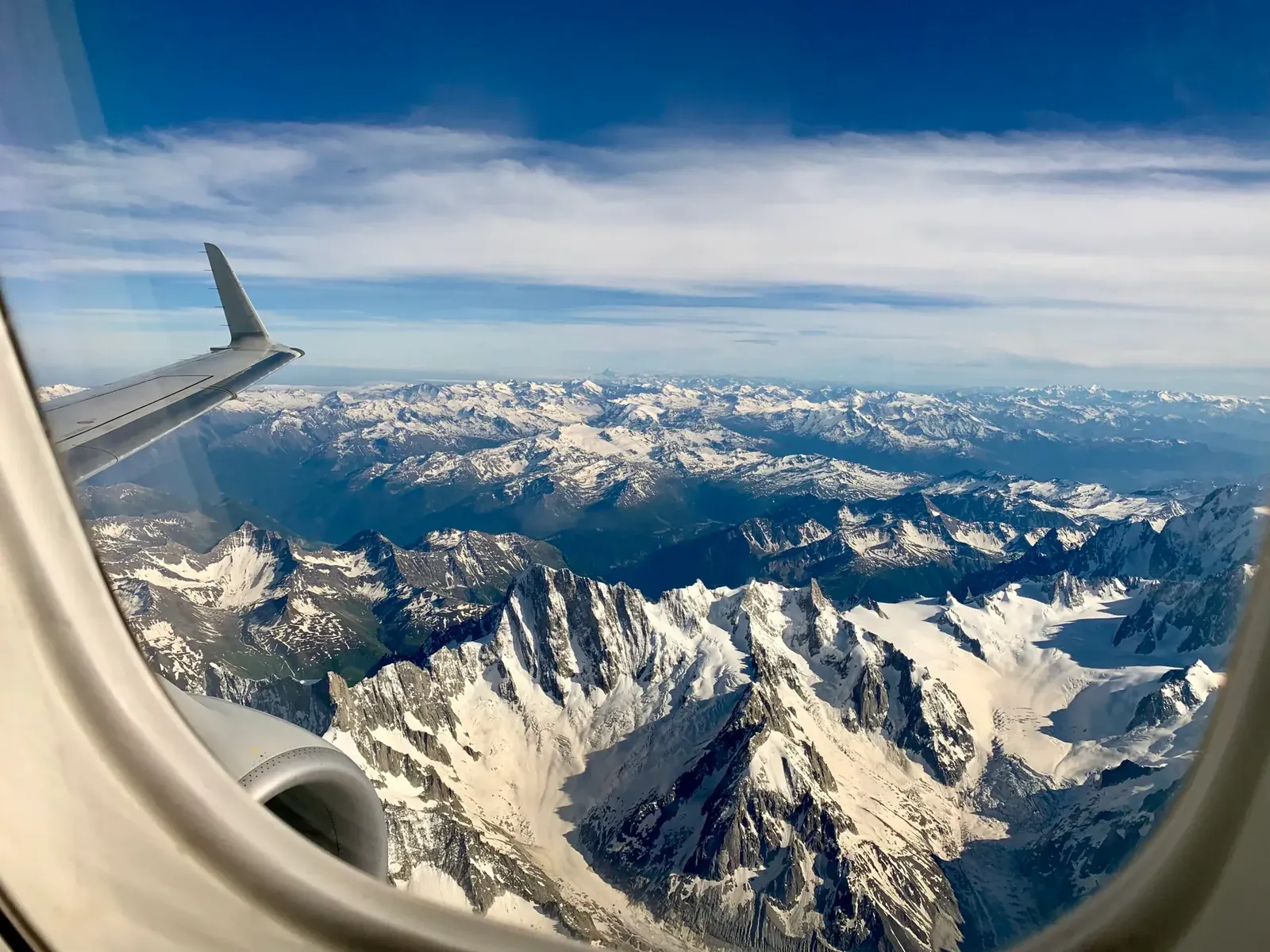
Why are airplane windows round? Look closely next time you’re waiting to board and you’ll notice two things most people never really register. Every window is a soft oval, no straight edges anywhere. And down in the corner of the glass sits a hole, tiny as a pinprick, that nobody ever seems worried about.
Both of those details are hiding a story. One starts with the world’s first jet airliner and a mistake that brought three of them down before anyone understood why. The other explains itself the moment you know it’s there. Window seat, please. We’re doing both.
Why airplane windows are round: the Comet’s fatal flaw
On 2 May 1952, the de Havilland Comet took off from London for Johannesburg carrying the future with it. It was the world’s first commercial jet airliner, cruising higher and faster and smoother than anything with propellers, gliding above the weather while piston airliners bounced through it below. BOAC had a genuine sensation on its hands.
Then, in January 1954, a Comet climbing out of Rome broke apart in clear air over the Mediterranean, killing all 35 people aboard. The fleet was grounded, inspected, and cleared to fly again. Barely two months later, another Comet broke apart near the same stretch of sea, killing 21. That was the end of guessing. The Comet was grounded for good while investigators tore the mystery apart.
What they did next is the part worth knowing. Engineers at Farnborough submerged an entire Comet fuselage in a water tank and pressurized it over and over, squeezing years of flights into weeks. Eventually the skin split, starting from the corners of the window cutouts. The Comet’s windows weren’t perfectly square, designers had already softened the corners slightly, but not nearly enough. Every pressurization cycle flexed the metal at those corners a little more than the metal around them, and a fatigue crack grew, invisible, a bit further with every flight, until one grew long enough to let go all at once at altitude.
That’s the physics in a sentence: a sharp corner concentrates stress, a curve spreads it out. Pull on a sheet of paper with a straight-edged notch cut into it and it tears from that corner every time. Round the corner and there’s no single point for the force to pile up on.
The fix was exactly that simple to state and enormously consequential in practice: round the windows, and round every cutout in a pressurized fuselage. Every jetliner built since, every Boeing, every Airbus, every regional jet, wears the lesson in the shape of its glass. That’s the honest answer to why airplane windows are round, and to why plane windows are oval rather than circular or square: an oval spreads stress in every direction at once, about as gentle a shape as a hole in a pressurized tube can be.
The tiny hole in the window: what a bleed hole actually does
Now the second mystery, the one hiding in plain sight at the bottom corner of the glass.
A modern airplane window isn’t one pane, it’s two or three acrylic layers stacked with a gap between them. Only the outer pane is built to hold back the real pressure difference: inside the cabin, air is kept at a pressure roughly like being 6,000 to 8,000 feet up a mountain, while outside, at cruising altitude, the air is thin enough to kill you in minutes. That’s a serious load, and it’s meant to sit on one pane alone.
That’s the whole reason for the tiny hole. It’s called a bleed hole, or a breather hole, and it’s drilled into the middle pane, not the outer one. It lets air slowly equalize between the cabin and the sealed gap behind the outer pane, so the pressure difference lands almost entirely on the outer layer. The middle pane stays essentially unloaded, a backup ready if the outer pane ever failed. The same small hole has a second job: it lets a trickle of warm, dry cabin air into that gap, which is why your window doesn’t fog or frost over at 35,000 feet, a few inches from air colder than an Antarctic winter.
So if you’ve ever wondered why airplane windows have a tiny hole and figured it was a flaw, it’s the opposite. It’s one of the more deliberate details on the entire aircraft.
Two things you’ll never unsee at a window seat
Next flight, look at your window properly. The rounded shape is a hundred-year-old lesson paid for at terrible cost in 1954, still quietly protecting every person on every jet that’s flown since. The tiny hole low in the corner is an engineer’s answer to a problem you’d never think to ask about, doing its job in total silence for the entire flight. Neither one is decoration. Both are the reason the window seat is safe enough to stop thinking about at all.
FAQ
Why Are Airplane Windows Round? Because early jetliners, most famously the de Havilland Comet, had windows with near-square corners that concentrated structural stress. Repeated pressurization cracked the metal at those corners, leading to catastrophic failures in 1954. Every jet since has used rounded or oval windows because curves spread that stress out instead of concentrating it.
Why Aren’t Airplane Windows Square? A square or sharp-cornered opening in a pressurized fuselage creates a point where stress concentrates every time the cabin pressurizes and depressurizes. Over thousands of flights that can grow into a fatigue crack. A rounded or oval window spreads the same force across a curve instead of a corner, which is why no square-windowed airliner has been built since the 1950s.
What Is the Small Hole in an Airplane Window For? It’s a bleed hole in the window’s middle pane. It equalizes pressure so the outer pane carries the cabin’s pressure load, and it lets a little warm cabin air into the gap between panes to stop condensation and frost from forming.
Why Are Plane Windows Oval Instead of Circular? An oval spreads stress evenly around its whole edge, similar to a circle, while fitting the practical shape of a fuselage and a seat-height sightline better than a true circle would. Either shape avoids the sharp corners that doomed the Comet.
Read next
Why Is British Airways Called Speedbird? Callsigns Explained
British Airways is called Speedbird after a 1932 Imperial Airways logo. Here's how that bird became BA's radio callsign, and how callsigns work.
How Flying WorksHow High Do Planes Fly? Cruising Altitude, Explained
Most airliners cruise between 31,000 and 42,000 feet, often near 35,000 feet, about 10.7 km up. Here's why that band exists and what caps it.
How Flying WorksWhat Does Mayday Mean? Origin, Pan-Pan and Squawk 7700
Mayday is the radio call for grave and imminent danger, said three times. Where the word comes from, plus what pan-pan, heavy, and squawk really mean.
Liked this?
Get the next one in your inbox. Aviation explained for the people who never lost the wonder. One email, no noise.