
Why Airlines Fly Empty Planes on Purpose
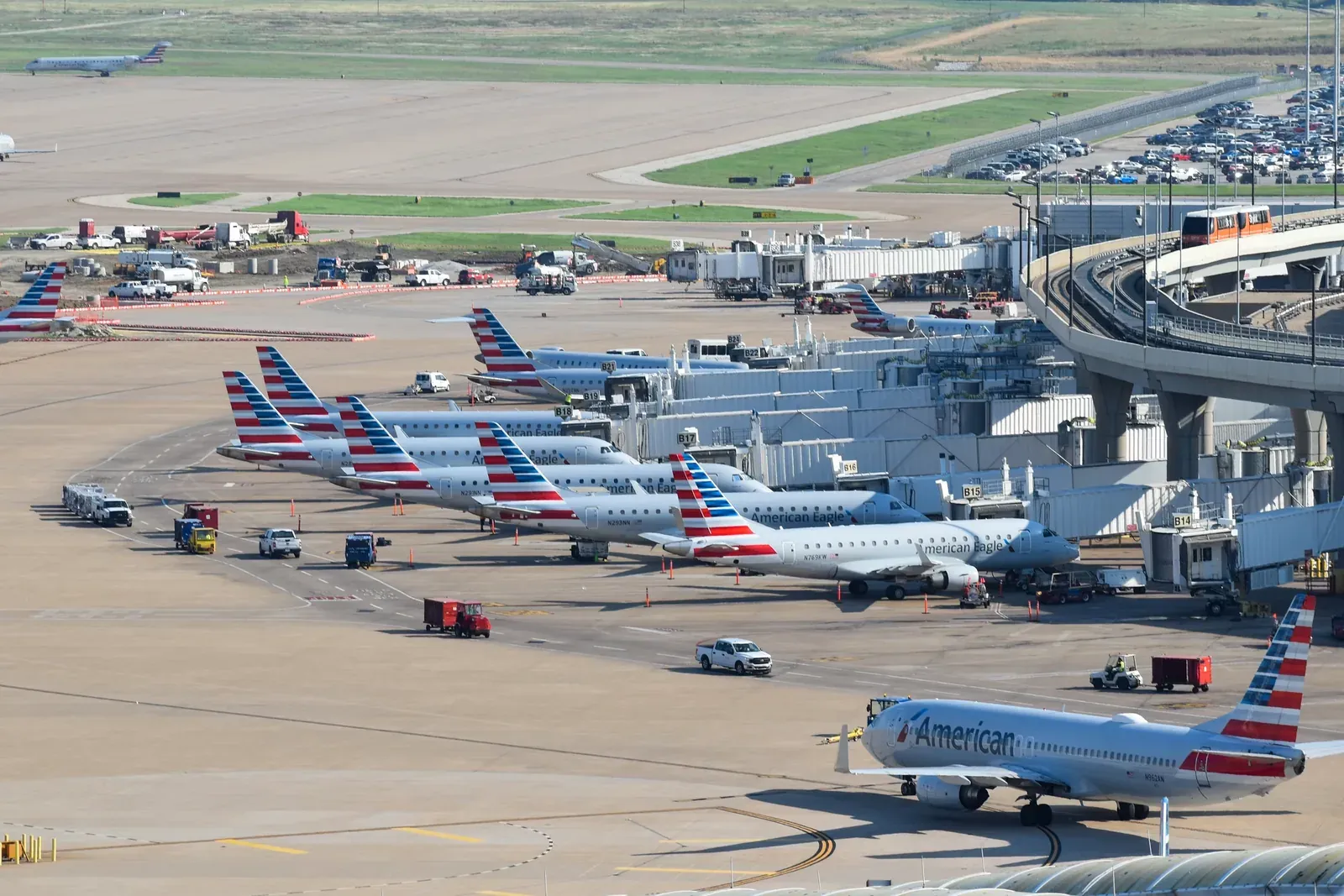
Picture a jet at the end of a runway at Heathrow, engines spooling up, brakes released, the whole 70-ton machine hauling itself into the sky. Now picture the cabin behind the cockpit: a handful of people scattered across 150 empty seats, maybe fewer. The crew outnumbers the passengers. The plane burns thousands of dollars of fuel to fly somewhere almost nobody wanted to go, then turns around and does it again.
Your first thought is that someone screwed up. Bad management, a booking system gone wrong, waste on a spectacular scale. It’s none of those. The airline did this on purpose, with a clear head and a spreadsheet, because flying that near-empty plane was the cheap option. It wasn’t carrying passengers. It was defending a sliver of time on a runway that can be worth more than the jet itself.
The rule that starts it all
At the world’s busiest airports, you can’t just show up and land. There isn’t room. A single runway can only handle so many takeoffs and landings per hour, and the terminals, gates, and controllers behind it have hard limits too. So at the most congested airports, every takeoff and every landing needs a permission, booked in advance, for a specific window of time. That permission is called a slot.
The busiest airports, where demand wildly outstrips capacity, are graded “Level 3,” or slot-coordinated. Heathrow is the textbook case. Slots are handed out twice a year for the summer and winter seasons, and once an airline has one, it tends to keep it. Under a principle called grandfather rights, an airline that held a slot last season gets first claim on it next season. That stability is the whole point. Nobody wants to re-plan every airline’s entire global network from scratch every six months.
But grandfather rights come with a catch, and the catch is the reason for everything strange that follows. To keep your slot, you have to actually use it. The standing rule is often called “use it or lose it,” or the 80/20 rule: an airline must operate a slot at least 80 percent of the time across a season. Fly it faithfully and it’s yours again next year. Fall below that line and you can forfeit it, and the airport hands it to a competitor who’s been circling for years.
So when demand for a route collapses, maybe a market dried up, maybe a season went soft, the airline faces a brutal little choice. Cancel the flights and drop below 80 percent, and risk losing the slot forever. Or keep flying, even with the cabin nearly empty, and hold the line. Put like that, the empty plane starts to make a grim kind of sense. But it only becomes obviously rational once you know the number.
A slot can be worth more than the plane
Here’s the fact that flips the whole thing. At the most congested airports, slots aren’t just permissions. They’re assets. They can be bought, sold, and traded between airlines, and at a place like Heathrow the prices are staggering.
A single slot pair, the right to one takeoff and one landing at a prime time of day, reportedly sold for around 75 million dollars at Heathrow back in 2016, when Oman Air is said to have bought a prime-time pair from Air France-KLM. Seventy-five million dollars. For a recurring appointment on a runway.
Sit with that next to the cost of flying an empty plane. Fuel, crew, and fees for a short-haul hop might run a few thousand dollars a flight, maybe a few hundred thousand across a whole season. Set that against an asset worth tens of millions, and the math stops being a puzzle. You don’t torch a $75 million asset to save a few thousand in fuel. You fly the empty plane. It isn’t waste. It’s protecting the crown jewels.
Once you’ve seen that a slot can be worth more than the aircraft using it, a lot of otherwise baffling airline behavior clicks into place. It’s the same hidden-economics logic that runs airline ticket pricing: the thing being sold isn’t quite the thing you think it is. It’s also the mirror image of why airlines oversell flights in the first place: one squeezes a few extra paying passengers onto a full plane, the other keeps a nearly empty one flying, and both are airlines protecting revenue you can’t see from your seat.
Keeping slots warm
Airlines have a phrase for flying just to hold a slot: keeping it warm. And the lengths they’ve gone to are, honestly, a little ridiculous.
When British Mediterranean Airways lost its Heathrow-to-Tashkent route, it reportedly kept the underlying Heathrow slots alive by running an A320 back and forth to Cardiff instead. Cardiff is about two hours away by car. The flight existed mostly to exist, so the slot would still be there when a better use came along.
Qantas pulled a similar trick. To hold onto valuable Heathrow slots, the Australian carrier is reported to have run a daily chartered regional jet on a Heathrow-to-Manchester round trip, a route it had no real interest in serving, purely to keep the slots ticking over. A long-haul giant flying a little turboprop-scale hop up the spine of England, not for the passengers, but for the appointment slip on the runway.
These flights look absurd because, in isolation, they are. They make sense only when you remember what’s really on the table.
How empty is “empty,” really
Now the honest part, because the headlines oversell it. A “ghost flight” is usually defined as one flying nearly empty, often under 10 percent of seats filled. That’s near-empty, not literally zero. The image of a completely deserted cabin roaring across the sky makes for a great outrage headline, but it’s rarely the literal truth.
And not every near-empty flight is a slot game. Airlines fly planes with almost nobody aboard for plenty of ordinary reasons. Repositioning, or “ferry,” flights move an aircraft to where it’s needed next. Some flights are really about the cargo in the hold, not the seats. Others keep crews current or move a plane in for maintenance. Airlines have also pushed back on the “ghost” label, arguing that some flagged flights were simply poorly booked scheduled services they’d have loved to cancel but couldn’t.
Both things can be true. The 80/20 rule created genuine pressure to keep weakly booked flights in the air rather than cancel them, even when “ghost” wildly overstates how empty the cabin actually was.
The uncomfortable part
All of this collided with the real world during the pandemic, and it got ugly. With travel demand gutted, the slot rule briefly forced airlines to choose between flying near-empty planes and losing slots they’d spent decades securing. Regulators temporarily suspended the 80 percent threshold, then phased it back through a messy series of intermediate levels before restoring the full rule. The thing to hold onto: 80 percent is the normal, standing threshold, and the pandemic-era numbers were a temporary, shifting exception, not the rule today.
Even so, ghost flights drew fire. Greenpeace analysis counted more than 10,000 of them across Europe in the winter of 2021-22. Lufthansa said it might have to run something like 18,000 empty or near-empty flights over a single winter to protect its slots. Petitions circulated, and the emissions of flying planes to carry almost nobody became a real point of anger.
The criticism is fair. Burning jet fuel to move empty seats through the sky is hard to defend on the merits, and the climate cost is real. The airlines’ bind is also fair. The rule genuinely does force the choice, and no company willingly forfeits an asset worth tens of millions to a rival. Both of those are true, sitting uncomfortably next to each other, and the tension between them is the actual story. It doesn’t resolve neatly.
The most valuable real estate in aviation
So the empty plane isn’t a blunder. It’s a rational move in a hidden, high-stakes game most passengers never know they’re flying above.
The prize in that game isn’t the aircraft, gorgeous and expensive as it is. It’s something you can’t see or touch: a recurring right to a few minutes on the busiest runways on Earth, the scarcest real estate in aviation. Guard it well and it’s worth a fortune. Let it lapse and it’s gone to a competitor forever. Next to that, a little fuel and a nearly empty cabin is a bargain. Strange, faintly absurd, and completely rational, all at once.
Read next
Longest Flights in the World 2026: Top Nonstops, Ranked
The longest flight in the world is Singapore Airlines from New York JFK to Singapore: about 15,350 km, scheduled at 18h 50m. See the 2026 top five.
Routes & NetworksWhat Is the Busiest Airport in the World? (2026)
What is the busiest airport in the world? Atlanta, by a wide margin, moving over 106 million passengers a year. Here's why, and who's closing in.
Routes & NetworksWhy the World's Longest Flight Has No Economy Class
The world's longest flights run close to 19 hours nonstop. Why ultra-long-haul routes exist, why they keep dying, and why the longest one has no cheap seat.
Liked this?
Get the next one in your inbox. Aviation explained for the people who never lost the wonder. One email, no noise.