
The Safest Seat on a Plane, According to the Data
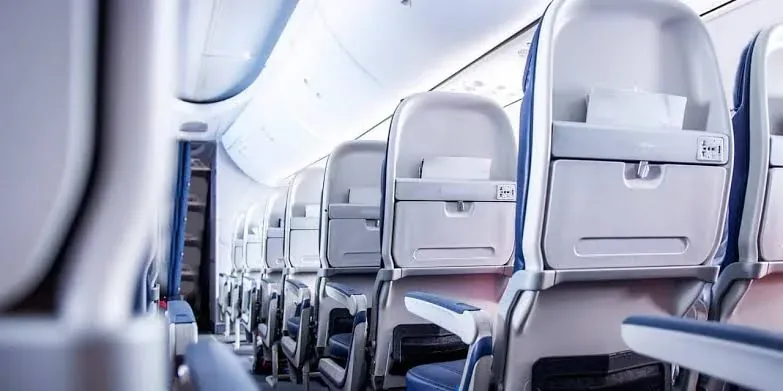
Everyone who’s ever clicked a seatbelt shut has wondered it at least once: is there a safest seat on a plane, one spot where you’d actually stand a better chance if the worst happened? It’s not a morbid question. It’s the kind of thing a curious mind asks about anything it’s strapped into for a few hours at altitude.
So here’s the honest answer, no dodging it. Yes, decades of crash data point to a rough pattern in where survivors tend to sit. And also: it barely moves the needle, because you’re already about as safe as a human being gets while hurtling through the sky at 500 miles an hour. Both of those things are true at the same time, and neither one cancels the other out.
What the data actually says
The number people cite most is a 2015 TIME analysis of 35 years of FAA accident data, narrowed to 17 crashes since 1985 with both fatalities and survivors and seating charts to compare. The pattern: rear-third seats had a 32 percent fatality rate, against 38 percent up front and 39 percent over the wing. The single best-faring spot was a middle seat in the back third, at 28 percent. The worst was an aisle seat in the middle third, at 44 percent.
That’s the honest headline for “safest seat on a plane in a crash”: the back, and the middle of a row, slightly, on average, across a small sample of a rare event. Seventeen accidents is a small enough sample that one unusual crash can swing the whole picture, and the researchers behind it said as much themselves. Every one of those seventeen started the same way: investigators go straight for the recorders, and despite the name, the black box isn’t black.
Why there’s no single best seat on a plane for safety
Every crash breaks a plane differently. A tail-first impact punishes the back rows; a nose-heavy one flips that. Ditch on water, and a door over the wing might matter more than anything else. No seat is safe against every version of a bad day, which is exactly why experts keep saying there’s no guaranteed safest place to sit on a plane. It isn’t a dodge. Outcomes depend on the specifics of the one accident you’re in.
That caveat matters more than the percentages, because of the number underneath all of this: a 2024 MIT study led by statistician Arnold Barnett put the fatality risk of a commercial flight at roughly 1 in 13.7 million passenger boardings worldwide from 2018 to 2022. You’re choosing between two spots on an event so rare the difference is closer to a rounding error than a real decision.
What actually helps in practice
If you want something more useful than a coin flip between front and back, the real research points somewhere more actionable: the exit row, or close to it.
Professor Ed Galea at the University of Greenwich studied nearly 2,000 passengers across more than a hundred real evacuations and found that people seated within about five rows of any usable exit had noticeably better odds of getting out, not because that seat survives impact better, but because evacuation is often what actually determines who makes it, and fewer rows means less time exposed. His research also found aisle seats beat window seats for the same reason: fewer people to climb past when seconds count.
So the honest practical version of “best seat on a plane for safety” isn’t a specific row number. It’s a habit: when you sit down, glance at the card, and count the rows to your two nearest exits, one might be behind you. That ten seconds of prep is what everything else you could do is really trying to approximate.
The turbulence part is the one that’s actually about you
Fatal crashes are vanishingly rare. Turbulence is not. The FAA has found that more than 90 percent of turbulence injuries happen to people who weren’t wearing their seatbelt when the air got rough, usually because the sign had been off a while and nobody thought to check back in.
That’s the genuinely useful safety habit hiding in plain sight, and it’s the same instinct behind why flying keeps getting safer overall: a century spent turning rare, dramatic risk into rules, while the ordinary, everyday risk gets managed by one boring habit. Keep the belt buckled whenever you’re seated, sign on or off.
You’re already in one of the safest places you’ll be all day
So, front or back, aisle or window: pick the seat you actually want. Pick the one with the legroom, or the view, or the spot nearest your travel companion. The data-driven difference between them is small enough that comfort is a perfectly rational tiebreaker.
What actually moves your odds isn’t the seat map. It’s knowing where your nearest exit is, and keeping that belt fastened when you’re sitting down. Do those two things, relax into whichever seat you picked, and let the astonishing safety record of modern flying do the rest. Statistically, you were safer boarding that plane than you were driving to the airport.
FAQ
Is it safer to sit at the front or back of a plane? The most-cited crash data analysis found rear-third seats had a somewhat lower fatality rate than front or overwing seats. But the sample is small, and researchers stress that where a crash’s impact lands, not a fixed part of the cabin, drives the outcome most.
Does sitting near an exit matter? Yes, more than front-versus-back seating does. Research on real evacuations found passengers within about five rows of any usable exit had better odds of getting out, largely because it shortens how long you’re exposed. Aisle seats beat window seats slightly too, since there’s fewer people to get past.
What’s the single best seat, if I have to pick one? There isn’t one that’s safe against every kind of accident. If you want a rule of thumb, an aisle seat within a few rows of an exit is the closest the evidence supports, but the honest answer is that the difference is marginal against how rare fatal accidents already are.
Should I actually worry about any of this? Not really. Fatal accidents are extraordinarily rare, on the order of 1 in several million boardings. The habit worth adopting has nothing to do with seat selection: know your nearest exit, and keep your seatbelt fastened while seated, since turbulence, not crashes, is the risk you’re statistically likeliest to meet.
Read next
What Causes Turbulence, and Why It Won't Bring a Plane Down
What causes turbulence on a plane, the handful of things that stir up the air, and the honest reason it's a comfort issue rather than a threat to the aircraft.
Incidents & SafetyThe Black Box Isn't Black (and It Isn't One Box)
Why is the black box orange, what does the black box record, and who invented it? The answer is a moving story most people never hear.
Incidents & SafetyWhy Flying Keeps Getting Safer: The Hidden System
Why flying keeps getting safer isn't luck. It's a system that treats every accident as a lesson to learn from, not a person to blame.
Liked this?
Get the next one in your inbox. Aviation explained for the people who never lost the wonder. One email, no noise.