
Can a Plane Fly With One Engine? Yes, and It's Fine
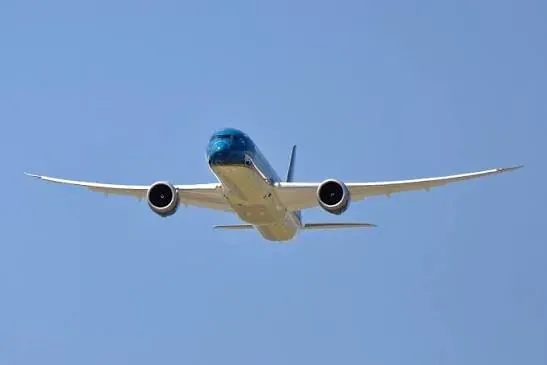
Can a plane fly with one engine? Yes. Not “yes, barely,” not “yes, in an emergency, with a prayer attached.” Every twin-engine airliner in the sky right now is designed from the ground up to fly, climb, and land on a single engine, and the pilots up front have practiced exactly that scenario more times than almost anything else they train for.
If you’ve ever felt your stomach drop at the thought of an engine quitting mid-flight, here’s the reassurance, and it’s not a brush-off: the entire system, the airplane, the certification rules, the training, the routes it’s allowed to fly, is built around the assumption that an engine could fail at the worst possible moment. That’s not a flaw in the design. It’s the design.
Why this isn’t a crisis: it’s a certified capability
Before a twin-engine jet ever carries a paying passenger, it has to prove something dramatic to regulators: that it can lose an engine at the single worst moment of the flight, the instant after the wheels leave the ground, and still climb away safely on the one that’s left.
That moment even has a name. During takeoff, there’s a speed called V1, the last point where a crew can still safely stop on the runway. Past V1, if an engine fails, the only real option is to keep going, and the aircraft is certified to do exactly that: continue the takeoff, lift off, and climb out on the remaining engine, meeting strict performance minimums the whole way. It’s one of the most heavily practiced maneuvers in aviation. Pilots run “engine failure at V1” in the simulator on a recurring basis, often every few months, until the response is closer to reflex than decision.
So can a plane land with one engine too? Yes, and it’s the easier half of the problem. An airliner cruising, descending, and landing needs far less power than climbing away from the ground does, so an engine-out landing is a well-rehearsed, unremarkable procedure from the flight deck’s point of view, even though it understandably doesn’t feel unremarkable from row 14.
What happens if a plane engine fails away from the ground, mid-cruise over open water or a stretch of wilderness? The crew runs a checklist, secures the failed engine, and diverts to the nearest suitable airport on the power that’s left. It changes the flight plan. It does not threaten the flight.
ETOPS: the rule that lets twins cross oceans on one engine
This single-engine capability isn’t just a safety backstop, it’s the whole reason modern twin-engine jets are allowed to fly the routes they fly. The framework behind it is called ETOPS, for Extended-range Twin-engine Operational Performance Standards, and it governs how far a twin-engine aircraft can venture from the nearest usable airport, the limits set out in the FAA’s ETOPS advisory circular.
The logic is straightforward. Regulators certify each twin-engine type for a maximum diversion time, the number of minutes it’s allowed to fly on one engine to reach a suitable landing strip if the other quits. The Airbus A350, powered by Rolls-Royce Trent XWB engines, currently holds the highest rating in the business: 370 minutes, better than six hours, on a single engine. The Boeing 777 and 787 aren’t far behind, rated at 330 minutes.
Those numbers are why a twin-engine jet can fly you nonstop over the middle of the Pacific or across the Arctic on routes with nothing but ocean or ice below for hours. The aircraft isn’t hoping nothing goes wrong. It’s certified for the specific, worst-case math of something going wrong, with a diversion airport always within reach on the power of one engine.
The bigger reassurance: even with no engines, a jet glides
Here’s the part that surprises people most, and it’s worth sitting with, because it answers the deeper fear underneath all this. Can a plane fly with no engines at all? Yes, for a surprisingly long way. A jet without any engine thrust doesn’t drop. It glides, the same as any aircraft with wings, just at a shallower angle and higher speed than a small glider plane.
The clearest real-world proof is the Gimli Glider. In 1983, Air Canada Flight 143, a Boeing 767, ran completely out of fuel at 41,000 feet over Canada, silencing both engines. The captain, who happened to have glider training, worked out a glide ratio of roughly 12 feet forward for every 1 foot of altitude lost, and used it to stretch the aircraft nearly 75 miles to a landing at a former air force runway in Gimli, Manitoba. No engines, dozens of miles covered, and everyone on board walked away.
That’s not a lucky fluke specific to one pilot. It’s physics that applies to every airliner built. Wings generate lift whether or not an engine is running. Losing power changes how a plane flies. It does not turn it into a rock.
The takeaway: this is a manageable event, not the end of the story
Put it together and the picture is a calm one. An engine failure on a twin-engine airliner triggers a checklist, a well-rehearsed procedure, and usually a diversion, not a crisis. The aircraft is certified for it. The crew has drilled it more times than they can count. And in the extraordinarily rare case where every engine stops, the airplane still glides, sometimes for dozens of miles, giving a trained crew real room to find a runway.
Next time you’re cruising along and your mind wanders to “what if,” you now know the actual answer: engineers already asked that question, years before you did, and built the whole system around answering it calmly.
FAQ
Can a plane fly with one engine? Yes. Every twin-engine airliner is certified to take off, climb, cruise, and land safely on a single engine, including continuing a takeoff after an engine failure right after V1, the speed past which stopping on the runway is no longer an option.
Can a plane land with one engine? Yes, and it’s considered the more straightforward half of an engine-out event. Landing needs far less power than climbing does, so a single-engine landing is a routine, heavily practiced procedure for airline crews.
What happens if a plane engine fails mid-flight? The crew runs a checklist, shuts down and secures the affected engine, and diverts to the nearest suitable airport on the power that remains. It’s a change of plan handled by procedure, not an emergency freefall.
Can a plane fly with no engines at all? Yes, for a surprising distance. A powerless jet glides rather than drops, since its wings still generate lift. The Gimli Glider, a Boeing 767 that lost both engines in 1983, glided nearly 75 miles from 41,000 feet to a safe landing.
Read next
Why Is British Airways Called Speedbird? Callsigns Explained
British Airways is called Speedbird after a 1932 Imperial Airways logo. Here's how that bird became BA's radio callsign, and how callsigns work.
How Flying WorksHow High Do Planes Fly? Cruising Altitude, Explained
Most airliners cruise between 31,000 and 42,000 feet, often near 35,000 feet, about 10.7 km up. Here's why that band exists and what caps it.
How Flying WorksWhat Does Mayday Mean? Origin, Pan-Pan and Squawk 7700
Mayday is the radio call for grave and imminent danger, said three times. Where the word comes from, plus what pan-pan, heavy, and squawk really mean.
Liked this?
Get the next one in your inbox. Aviation explained for the people who never lost the wonder. One email, no noise.